
Choosing the right full-body workout for beginners is about more than finding a short list of easy exercises. A good beginner workout should condition your body while developing practical strength, balance, mobility and core stability.
Beginner workouts are supposed to simple, but don’t let that put you off. Many effective beginner exercises mimic movements you already use in everyday life, such as standing up, sitting down, getting out of a chair, pushing, pulling, bending down and carrying large items, in a safe way.
Functional exercises such as air squats, chair squats, wall push-ups, supported rows, lunges and knee push-ups can help strengthen the muscles involved in these movements. They can also prepare your body for more demanding workouts later.
The most important thing is to choose a workout that matches your current ability—not simply your age or the level you hope to reach. The age is a good guide to use and you can always intensify the workouts.
What does “beginner workout” really mean?
The phrase “beginner workout” can sometimes be misleading. It may suggest that the exercises are extremely basic or will not produce meaningful results, which can be demotivating.
However, a properly designed beginner workout is not necessarily easy. It provides the foundational strength, movement control and stability needed to exercise safely and progress effectively.

Most exercises can be adapted for different fitness levels. A beginner might complete a chair-supported squat, while someone at an intermediate level performs an unsupported air squat. A more advanced person may add repetitions, increase the depth of the movement or introduce additional resistance.
The movement pattern remains similar, but the intensity changes.
Not every beginner workout will be suitable for every person. Your starting point should consider:
- your current fitness level;
- your recent activity;
- previous injuries;
- balance and mobility;
- existing health conditions;
- your age and recovery needs; and
- the movements you can perform with good control.
If you are unsure, ask a qualified coach, personal trainer or healthcare professional for guidance.
Why age and starting fitness matter
A beginner workout for an active 25-year-old woman may be more intensive than a plan designed for someone beginning to exercise at 55.
This does not mean that someone starting later in life cannot become strong and fit. With consistent training, a 55-year-old can make significant improvements and may become fitter than many younger adults. However, comparing people purely by age is rarely useful.
Progress should be measured from your own starting point.
One reason gradual progression matters is that training does not affect only your muscles. Your tendons, ligaments, joints, balance and movement control must also adapt to the additional workload.
Your muscles may feel ready to do more before the rest of your body is prepared for a sudden increase in intensity. Building gradually gives your whole body time to adjust.
What should a beginner full-body workout include?
A balanced full-body workout for beginners should cover the main movement patterns without making the session unnecessarily complicated.
A basic session may include:
- a squat or sit-to-stand movement;
- a wall, raised or knee push-up;
- a supported row or resistance-band pull;
- a hip bridge or supported hip hinge;
- a lunge, step-up or supported split squat;
- a simple core-stability exercise; and
- a balance or carrying exercise.
Start with variations you can perform with good control and without sharp pain. Using a chair, wall or stable surface for support is a sensible way to learn a movement.
The purpose of your first few weeks is to practise the exercises, understand your body and establish a routine. You do not need to make every session exhausting.
How MyInstaFit helps you choose a suitable workout
You can use the MyInstaFit app to understand whether you fit the recommended profile for one of our workouts by checking its labels and tags.

Workouts may carry labels such as:
- Beginner Friendly;
- Low Impact;
- 40+;
- 50+;
- Home Workout;
- No Equipment; or
- Moderate Intensity.
These labels help you identify workouts that are appropriate for your current fitness level, age, equipment and goals.
You can add workouts directly to your plan and access guidance from professionally qualified personal trainers and nutritionists. The guidance can help you adapt a workout when you are beginning your fitness journey or when you are ready to increase the intensity after your second or third week.
You should still review how your body responds. A label is helpful, but it cannot replace individual judgement or professional advice.
Guidance on choosing the right workout
There is a huge amount of fitness content available online and through social media. Some of it is useful, but a considerable amount is unqualified, poorly explained or unsuitable for the people following it.
Before starting a workout plan, check:
- Who created or reviewed the plan?
- Does the creator have suitable fitness qualifications?
- Does the plan explain who it is intended for?
- Are beginner, moderate and advanced options provided?
- Does it explain how to perform the exercises?
- Can the workout be adapted around your fitness level or limitations?
- Does it include rest, recovery and progression guidance?
If the plan was generated using AI, check whether a qualified professional has reviewed it. An AI-generated plan should not automatically be treated as personalised advice. Review the exercises, remove anything unsuitable and make adjustments for your circumstances.
Choosing a workout between the ages of 30 and 40
If you are between 30 and 40, do not assume that you should begin with an intensive workout simply because of your age.
Someone who has trained regularly for several years will have a different starting point from someone who has been inactive, works at a desk or is returning after an injury.
Begin with movements you can control. Focus on:
- learning the correct technique;
- developing full-body strength;
- improving mobility;
- completing controlled repetitions; and
- building a routine you can maintain.
When the workout becomes comfortable, progress by adding a small number of repetitions, slightly increasing the resistance or extending the working time.
Choosing a workout between the ages of 40 and 50
Between 40 and 50, strength training becomes increasingly important, but recovery, mobility and movement quality should also receive proper attention.
A suitable plan may include two or three full-body workouts each week, supported by walking, mobility work and rest days.
Pay particular attention to:
- warming up properly;
- controlled squats and lunges;
- core stability;
- back and shoulder strength;
- hip mobility;
- recovery between sessions; and
- increasing intensity gradually.
If you have been inactive, begin below the level you think you should be able to complete. Building a strong foundation is more valuable than pushing through a difficult first week and then being unable to continue.
Choosing a workout between the ages of 50 and 60
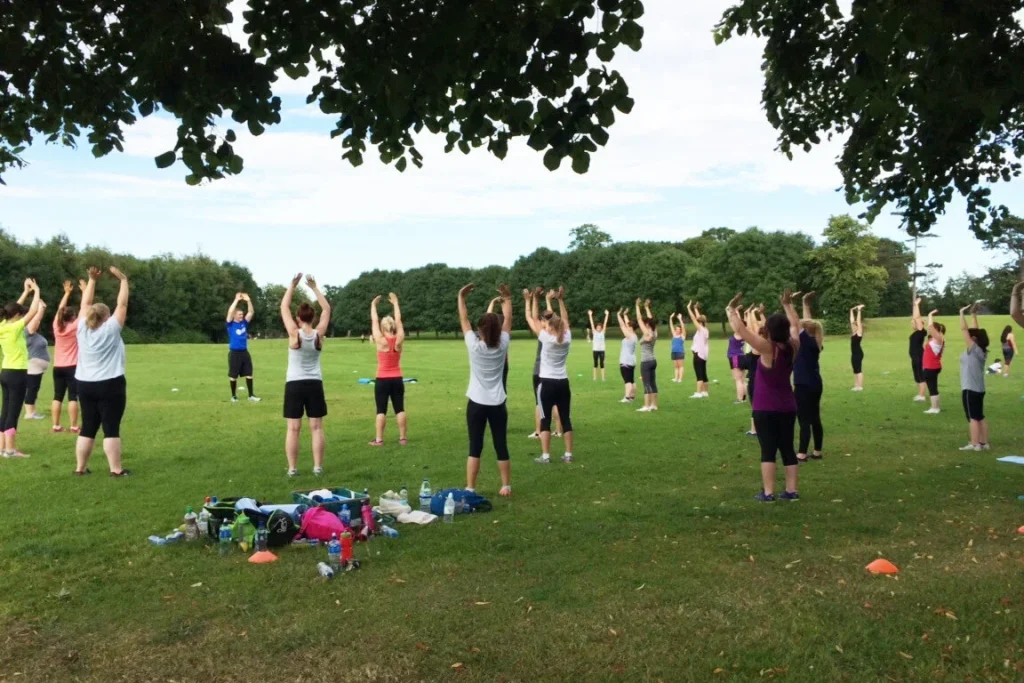
For beginners between 50 and 60, the plan should strengthen the body for everyday activities while improving balance, mobility and confidence.
Useful exercises can include:
- chair squats or sit-to-stands;
- wall or raised push-ups;
- supported rows;
- step-ups;
- hip bridges;
- supported lunges; and
- controlled core exercises.
Begin with body weight or light resistance. Once your technique is consistent and the final repetitions feel manageable, progress gradually.
Walking, yoga, Pilates and mobility sessions can complement strength training, but they do not always replace the need for progressive full-body strength work.
Choosing a workout between the ages of 60 and 70
Between 60 and 70, a good beginner plan should prioritise strength, balance, flexibility and movement confidence.
That does not mean the workout must remain easy. It means the exercises and intensity should match your ability.
Start with supported movements when necessary and concentrate on:
- standing up from a chair with control;
- maintaining balance;
- strengthening the legs and hips;
- improving posture;
- developing back and core strength; and
- remaining active between workouts.
The NHS recommends that adults aged 65 and over remain active every day and include activities that improve strength, balance and flexibility on at least two days each week, on top of your everyday usual activities.
If you have not exercised for some time or have a medical condition, speak to your GP or a qualified healthcare professional before starting a workout programme.
Choosing a workout when you are over 70
People over 70 can still benefit considerably from appropriately designed strength and fitness training.
Begin with exercises that allow you to use a chair, wall or stable surface for support. Suitable starting movements may include:
- supported sit-to-stands
- wall push-ups
- seated knee extensions
- heel raises
- gentle marching
- supported rows
- controlled step-ups and
- balance exercises
The goal is to maintain or improve your independence, movement quality, balance and confidence. Short sessions completed consistently may be more useful than an occasional long workout.
If you have experienced a fall, feel unsteady or have concerns about your heart, joints, bones or balance, seek professional advice before progressing.
Beginner-level workout adjustments
At beginner level, make the workout manageable enough that you can learn the exercises and repeat the plan consistently.
You can adapt a workout by:
- using a chair or wall for support
- reducing the movement range
- completing fewer repetitions
- performing one or two sets
- taking longer rests
- using body weight instead of additional weight; and
- choosing knee or raised push-ups instead of full push-ups
These adjustments are not signs of failure. They are tools that allow you to develop strength while reducing unnecessary injury risk.
How to make a workout more advanced
When you are ready to intensify your workout, avoid changing everything at once.
You can increase the challenge by:
- extending controlled holds
- adding a small number of repetitions
- completing an additional set
- reducing rest periods slightly
- slowing down parts of the movement
- increasing the range of motion or
- adding light resistance
Compound exercises
Compound exercises work several muscle groups and joints during the same movement. Examples that can be performed or adapted at home include:
- air squats
- push-ups
- lunges
- supported or resistance-band rows
- pull-ups or chin-ups, where suitable equipment is available and
- weighted squats or rows
Only add speed, weight or reduced rest when you can complete the existing version with good technique and without pain.
Should men and women choose different beginner workouts?
Men and women can generally use the same fundamental movement patterns, including squatting, pushing, pulling, hinging, carrying and core-stability exercises.
The correct starting level should be based on the individual rather than sex alone.
Some people will begin with greater flexibility but need to develop more strength and movement control. Others may have more natural strength but need additional mobility and core work.
To intensify a workout, you may increase the pace, reduce the rest time or add resistance. Before doing this, spend time developing your technique, mobility and core stability.
How many full-body workouts should a beginner do?
For many beginners, two or three full-body workouts each week can provide a practical starting point.
Leave enough recovery time between demanding sessions and remain active on the other days through walking, mobility work or another comfortable activity.
The ideal schedule depends on:
- the intensity of the workout
- your training history
- your sleep and recovery
- your age
- other activities you perform and
- how your body responds
Consistency is more important than completing the maximum number of sessions.
Pick the workout and be consistent
The best full-body workout for beginners is not necessarily the one that looks the most impressive or leaves you completely exhausted.
Consistency
The magic word in any workout though is ‘consistency’, it may seem obvious but its true. No matter how good the workout plan is- if you give up after a week, you will not see the results.
Patience
Patience is also important everyone’s body is different and they respond to exercises in different ways. Your body has its own way improving your health and if you are new to fitness, be patient enough, at least one month, so you can start seeing visual results. Because the body targets visceral fat sources before it starts consuming the more visual fatty sources.
Discipline
Discipline is important because you need to be able to push through the days where you are tired and have some aches and pains, which are normal, so you must force yourself to get up and do your routine. A lot of people also prefer to do there exercises in the mornings, that way its done, whilst you’re fresh, rather than trying to force yourself to get up off the sofa, after a nice warm meal.
It is the workout that:
- Matches your current ability
- Teaches useful movement patterns
- Tests you and get you out of breath
- Can be adapted as you improve
- Works the major muscle groups
- Fits into your week and
- Allows you to train consistently.
Start with controlled movements, build foundational strength and give your muscles, tendons, ligaments and joints time to adapt.
You can then progress by adding repetitions, extending holds, reducing rest periods or introducing light resistance.
Tips to help you stay motivated and stick to your workout plan
- Try to do it in the mornings as soon as you wake up- so yo don’t have time to talk yourself out of it
- Train on an empty stomach, before breakfast, you’ll feel lighter on your feet and less lethargic.
- Create a playlist of music that you like and synchronise your work outs with each song
- If you see some swelling of your ankles at the start, it means things are working; You’ve stressed your body and the swelling is normal. If there’s bruising and pains, seek medical advice.
- Pick a training partner, even virtually, someone who can give you that nudge and support you
- Work towards a comprehensive plan, that includes Yoga, strength training, stretching and Hiit exercises that push your heart rate.
Use MyInstaFit workout labels and professional guidance to find a suitable starting point, add the workouts to your weekly plan and make adjustments as your fitness improves.
Editorial sources & References
- NHS: Physical activity guidelines for older adults
- NHS: How to improve your strength and flexibility
- CDC: Physical activity guidance for older adults
Medical disclaimer: This article provides general fitness information and is not a substitute for personalised medical advice, diagnosis or treatment. Speak to a qualified healthcare professional before beginning a new exercise programme if you have a medical condition, injury, persistent pain or concerns about exercising. If in doubt, always seek medical advice.